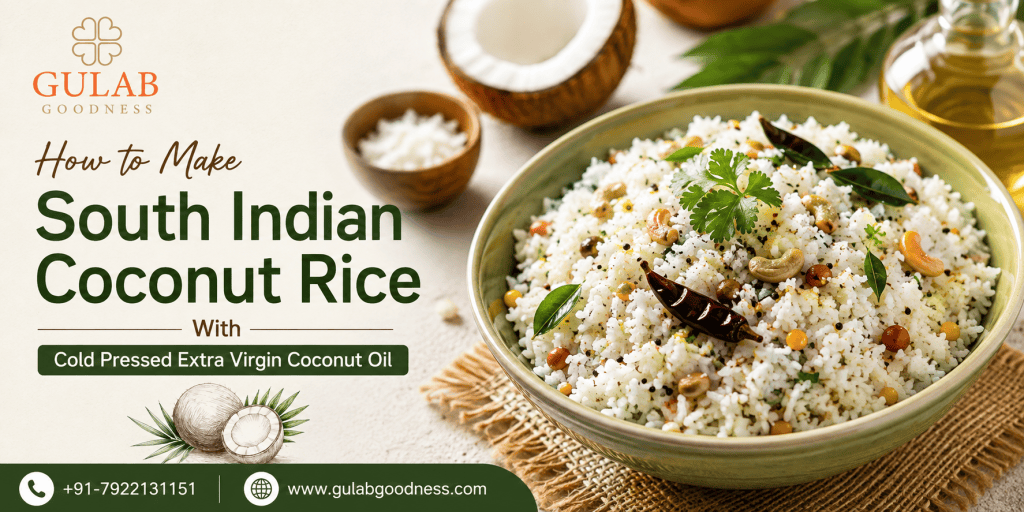
There are some rice dishes that do not need a long list of ingredients to taste special. South Indian coconut rice is one of them. Fragrant rice, freshly grated coconut, a few simple tempering ingredients, and the right cooking oil can turn an ordinary bowl of rice into a comforting meal.
Using cold pressed extra virgin coconut oil in this recipe adds a gentle coconut aroma that works naturally with curry leaves, mustard seeds, green chilli, and fresh coconut. It is especially useful when you want the oil itself to complement the flavour of the dish instead of simply acting as a cooking medium.
The best part? This recipe is easy enough for a weekday lunch and tasty enough to serve when guests arrive unexpectedly.
Why Coconut Rice Works So Well With Coconut Oil
Coconut rice already has a naturally mild, creamy and slightly sweet character from freshly grated coconut. Coconut oil fits into that flavour profile without feeling out of place.
When the tempering begins to sizzle, the aroma of curry leaves, mustard seeds and coconut starts filling the kitchen. Add cooked rice to this mixture, and you get a dish that feels far more elaborate than it actually is.
For this recipe, choose an oil with a clean aroma and good-quality ingredients. People looking for cold pressed virgin coconut oil India options often compare extraction methods, ingredient quality, packaging and freshness before making a choice. Those details matter because the oil you use should taste pleasant and suit the food you prepare regularly.
Ingredients You’ll Need
For approximately 3–4 servings:
- 2 cups cooked rice
- ¾ cup freshly grated coconut
- 1½ to 2 tablespoons cold pressed extra virgin coconut oil
- 1 teaspoon mustard seeds
- 1 teaspoon urad dal
- 1 teaspoon chana dal
- 8–10 curry leaves
- 1–2 green chillies, finely chopped
- 2 dried red chillies
- 2 tablespoons roasted peanuts or cashews
- ¼ teaspoon turmeric powder
- Salt to taste
- A pinch of asafoetida
- 1 tablespoon chopped coriander
- Optional: 1 teaspoon grated ginger
A Small Rice Tip That Makes a Big Difference
Do not cook the rice until it becomes soft and sticky. Coconut rice tastes better when the grains remain separate.
If you are preparing the rice specifically for this recipe, cook it slightly firm, spread it on a wide plate and allow it to cool for a few minutes. This releases excess steam and makes it easier to mix the rice with the tempering without turning it mushy.
How to Make South Indian Coconut Rice
1. Prepare the Rice
Cook the rice and allow it to cool until it is warm or at room temperature. Separate the grains gently using a fork or spoon.
If you are using leftover plain rice, this is an excellent way to give it a completely different character.
2. Heat the Coconut Oil
Place a kadai or wide pan over medium heat and add cold pressed extra virgin coconut oil.
You do not need a large quantity. The purpose is to coat the tempering ingredients and rice while allowing the coconut flavour to come through without making the dish greasy.
3. Build the Tempering
Add mustard seeds and let them splutter. Then add urad dal, chana dal and peanuts or cashews.
Stir until the dals turn lightly golden and the nuts become crisp.
Next, add curry leaves, green chillies, dried red chillies, ginger if using, and a pinch of asafoetida.
Be careful when adding curry leaves because they may splutter when they hit the hot oil.
4. Add Turmeric and Coconut
Lower the flame and add turmeric powder.
Now add the freshly grated coconut. Stir gently for about 1–2 minutes.
You are not trying to brown the coconut. The goal is simply to warm it and allow it to absorb the flavour of the tempering.
5. Add the Cooked Rice
Add the cooked rice and salt.
Mix slowly from the sides towards the centre. Avoid vigorous stirring, especially if the rice is soft.
Give everything enough time to combine so the coconut, tempering and oil are distributed throughout the rice.
6. Finish With Fresh Coriander
Switch off the flame and add chopped coriander.
Taste once before serving. If required, add a little salt.
Let the coconut rice rest for a few minutes before serving. This short resting time allows the flavours to settle and makes the coconut aroma more noticeable.
What Makes This Recipe Better?
A good coconut rice is not about adding more oil or more coconut. It is about getting the balance right.
Here are a few practical things that make a noticeable difference:
Use freshly grated coconut: Fresh coconut gives the dish a softer texture and more natural flavour than very dry coconut.
Keep the rice separate: Sticky rice can make the finished dish heavy. Cooling cooked rice before mixing helps maintain individual grains.
Do not overcook the coconut: Excessive heating can change its delicate flavour and texture.
Use moderate heat: The tempering needs enough heat to release flavour, but the ingredients should not become dark or burnt.
Taste before adding extra oil: If the rice already feels well coated, there is no need to keep adding oil.
These small details are more important than following the recipe mechanically.
How to Choose Coconut Oil for This Recipe
If you are comparing the best cold pressed virgin coconut oil options, do not judge the product only by the words printed on the front of the bottle.
Look at the ingredient list, packaging information, batch details, storage instructions and manufacturing information. The oil should be properly packaged and stored according to the manufacturer’s directions.
People searching for virgin coconut cold pressed oil may also notice that coconut oil can change from a clear liquid to a semi-solid or solid texture depending on temperature. That change alone does not necessarily mean the oil has gone bad.
Similarly, someone searching for the best extra virgin cold pressed coconut oil should consider freshness, sourcing, processing information and whether the flavour suits their intended use.
For broader food-safety guidance, the Food Safety and Standards Authority of India provides consumer resources covering safe food preparation, storage and kitchen hygiene.
What Can You Serve With Coconut Rice?
This rice is flexible enough to work as a complete light meal or as part of a larger South Indian-style spread.
Try serving it with:
- Plain curd or yoghurt
- Cucumber raita
- Vegetable stir-fry
- Simple dal
- Papad
- Pickle
- Roasted vegetables
- A fresh seasonal salad
For lunchboxes, allow the rice to cool properly before packing it into a clean, suitable container.
A Simple Variation for Busy Days
If you do not have freshly grated coconut available, you can use unsweetened desiccated coconut. However, fresh coconut generally gives a softer texture and more authentic taste.
You can also make the recipe more filling by adding roasted peanuts, cashews or lightly sautéed vegetables.
For a slightly sharper flavour, a small squeeze of lemon can be added after switching off the heat. Do not add too much, though—the coconut flavour should remain noticeable.
Common Mistakes to Avoid
Using freshly cooked, steaming-hot rice: It can become sticky while mixing.
Burning the tempering: Darkened mustard seeds or dal can make the whole dish bitter.
Frying the coconut for too long: Coconut should be gently warmed rather than heavily browned.
Adding too much oil: More oil does not automatically mean better coconut rice.
Overloading the recipe with spices: This is a simple dish. Too many strong spices can overpower the coconut and tempering.
Why This Recipe Is Worth Keeping
There is something practical about recipes like coconut rice. You do not need an elaborate shopping list or hours in the kitchen. If you have cooked rice and a few basic South Indian ingredients at home, you can put together a satisfying meal fairly quickly.
The combination of fresh coconut, curry leaves, roasted dals, chillies and cold pressed extra virgin coconut oil gives the rice a distinctive aroma without making the recipe complicated.
It is also a useful way to turn leftover rice into something that feels freshly prepared.
Final Thoughts
South Indian coconut rice is proof that everyday cooking does not have to be complicated to be enjoyable. With properly cooked rice, fresh coconut, a well-balanced tempering and good-quality cold pressed extra virgin coconut oil, you can create a comforting dish with very little effort.
The key is to pay attention to the small details—keep the rice separate, temper the ingredients carefully, warm the coconut gently and avoid using more oil than necessary.
If you enjoy preparing simple, flavourful meals with carefully selected ingredients, Gulab Goodness can be a useful option to explore when choosing coconut oil for your everyday kitchen needs.
Good coconut rice comes down to simple things—fresh ingredients, properly cooked rice, balanced tempering and careful cooking. Once you get these basics right, this recipe can easily become a regular part of your lunch or dinner routine.
Contact Us: If you have questions about coconut oil, product details or want help choosing the right option for your cooking needs, feel free to get in touch with us.
Frequently Asked Questions
1. Can I use leftover rice for coconut rice?
Yes. In fact, leftover rice can work particularly well because it is usually firmer and easier to mix without becoming mushy.
2. Can coconut rice be made without nuts?
Absolutely. Peanuts and cashews are optional. You can leave them out if you have an allergy, dietary restriction or simply prefer the rice without them.
3. How much coconut oil should I use?
For around 3–4 servings, 1½ to 2 tablespoons is generally enough to prepare the tempering and coat the rice. You can adjust the amount according to your recipe and preference.
4. Can I use desiccated coconut instead of fresh coconut?
Yes. Use unsweetened desiccated coconut if fresh coconut is unavailable, although fresh coconut usually provides a softer texture and more pronounced natural flavour.
5. Is coconut rice suitable for lunchboxes?
Yes, provided it is prepared, cooled and packed hygienically. For food-safety guidance, FSSAI recommends appropriate handling, storage and temperature control for prepared foods.
6. Why does coconut oil sometimes become solid?
Coconut oil can naturally change between liquid and solid states depending on the surrounding temperature. Texture changes alone are not necessarily an indication that the oil is spoiled.


Leave a Reply