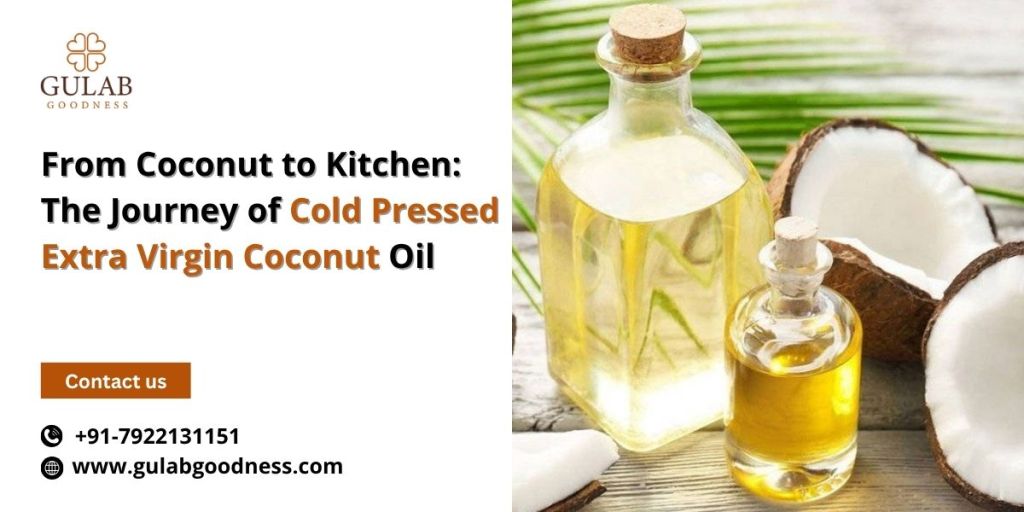
Have you ever wondered how a humble coconut makes its way from a tropical palm to your kitchen shelf? The journey of cold pressed extra virgin coconut oil begins with carefully selected mature coconuts and continues through cleaning, preparation, gentle mechanical extraction, filtration, and careful packaging. Each stage can influence the oil’s natural characteristics, aroma, and overall quality, making the journey from coconut to kitchen an interesting one to understand.
1. It All Begins with Fresh, Mature Coconuts
The journey starts with selecting good-quality, mature coconuts. Mature coconuts generally contain a higher amount of coconut meat, which is the raw material used to produce coconut oil.
Once harvested, the coconuts are sorted to remove damaged or unsuitable ones. This initial step is important because the quality of the raw material directly affects the finished oil.
Freshness also matters. Proper handling and storage help maintain the natural properties of the coconut before it reaches the processing stage.
2. Removing the Husk and Shell
After harvesting, the outer husk is removed from the coconut. The hard shell is then cracked open to access the white coconut meat inside.
The coconut meat is separated from the shell and cleaned thoroughly. Depending on the production method, the fresh coconut meat may then be processed into coconut milk or prepared for direct oil extraction.
This stage requires careful handling to maintain cleanliness and preserve the natural qualities of the coconut.
3. Preparing the Coconut for Oil Extraction
The cleaned coconut meat is prepared for extraction. In traditional and modern cold-pressing methods, the objective is to extract the oil without relying on excessive heat.
The coconut is mechanically pressed to separate its natural oil from the solid portion. Because the process focuses on mechanical extraction rather than aggressive heating or chemical solvents, the resulting oil can retain its characteristic coconut aroma and flavour.
This is one of the key reasons consumers look for cold-pressed coconut oils when choosing cooking oils.
4. The Cold-Pressing Stage
The heart of the process is pressing. Coconut material is placed into a mechanical press, where pressure helps release the naturally occurring oil.
Unlike processes that depend heavily on high temperatures, cold pressing aims to keep processing temperatures relatively low. This approach helps protect the oil from unnecessary thermal exposure.
However, it is important to remember that “cold pressed” does not necessarily mean that the oil never experiences any heat. Temperature can vary depending on equipment, processing conditions, and manufacturer practices.
5. Filtration and Clarification
Freshly extracted coconut oil may contain tiny particles or moisture. These are separated through appropriate filtration or clarification methods.
Proper filtration gives the oil a cleaner appearance while helping remove unwanted solid particles. Good manufacturing practices at this stage are essential for maintaining quality and stability.
For consumers, checking the product label and understanding how the manufacturer describes its processing method can be useful when choosing an oil.
6. Why “Extra Virgin” Matters
The term “extra virgin” is often associated with minimally processed oils and high-quality raw materials. However, terminology and legal standards can vary depending on the market and product category.
When purchasing cold pressed extra virgin coconut oil, consumers should look beyond the name on the bottle. Information about ingredients, processing, packaging, quality testing, and storage can provide a better picture of the product.
A transparent label can make it easier to understand what you are actually buying.
7. From Processing Unit to Your Kitchen
Once the oil has been processed and appropriately packed, it begins its journey to consumers. Packaging plays an important role because coconut oil can be affected by environmental factors such as heat, light, and moisture.
At home, storing coconut oil in a cool, dry place away from direct sunlight can help maintain its quality. Coconut oil may naturally become liquid in warm conditions and solid in cooler temperatures. This change in texture is normal and does not necessarily indicate that the oil has spoiled.
8. Bringing Natural Coconut Goodness into Everyday Cooking
One of the appealing characteristics of coconut oil is its versatility. It can be used in a variety of everyday preparations, depending on personal taste and cooking requirements.
Its distinct coconut aroma can work particularly well with dishes where a subtle coconut flavour complements the ingredients. It can also be incorporated into baking and other food preparations.
For general information about the nutritional aspects of coconut and coconut products, readers can refer to the U.S. Department of Agriculture (USDA) FoodData Central, which provides a searchable database of food and nutrition information.
As with any cooking oil, portion size and overall dietary balance matter. Choosing an oil should be based on your cooking preferences, nutritional needs, and overall eating pattern.
What Makes the Journey Important?
The journey from coconut to kitchen shows why every stage of production matters. Good-quality coconuts, careful preparation, mechanical extraction, suitable filtration, hygienic handling, and appropriate packaging all contribute to the final product.
Choosing cold-pressed extra virgin coconut oil is therefore not just about picking a product from a shelf. It is also about understanding how the oil was made and selecting a product from a manufacturer that provides clear information about its sourcing and processing.
Final Thoughts
From a freshly harvested coconut to a bottle sitting in your kitchen, coconut oil goes through several carefully managed stages. Cold pressing offers a mechanical approach to extraction that aims to minimise unnecessary heat and preserve the oil’s natural characteristics.
If you are exploring cold-pressed extra virgin coconut oil for everyday cooking, take a moment to read the label, check the ingredients and processing information, and choose a product that fits your preferences.
For those looking for quality coconut oil for their kitchen, Gulab Gudness offers a convenient option to explore.
Contact Us: For product information or assistance, feel free to get in touch with our team.


Leave a Reply